Case Study
Hadayek El Asema Station
An integrated waiting-station and public-realm project designed to improve comfort, movement, landscape, and the everyday experience of public space.
Location
Hadayek El Asema, Cairo
Funding
Self-funded
Elements
Multiple integrated systems
Status
Delivered
Plants & Trees
More than 3,000
The challenge
Hadayek El Asema needed a waiting station that would serve its daily users with dignity — not a bare shelter, but a piece of public infrastructure that elevated the experience of waiting. The site required integrated landscape, shading, seating, lighting and irrigation, all delivered to a high standard and on a self-funded budget. The question was whether a single, integrated delivery team could produce work of this quality without public funds.
What we delivered
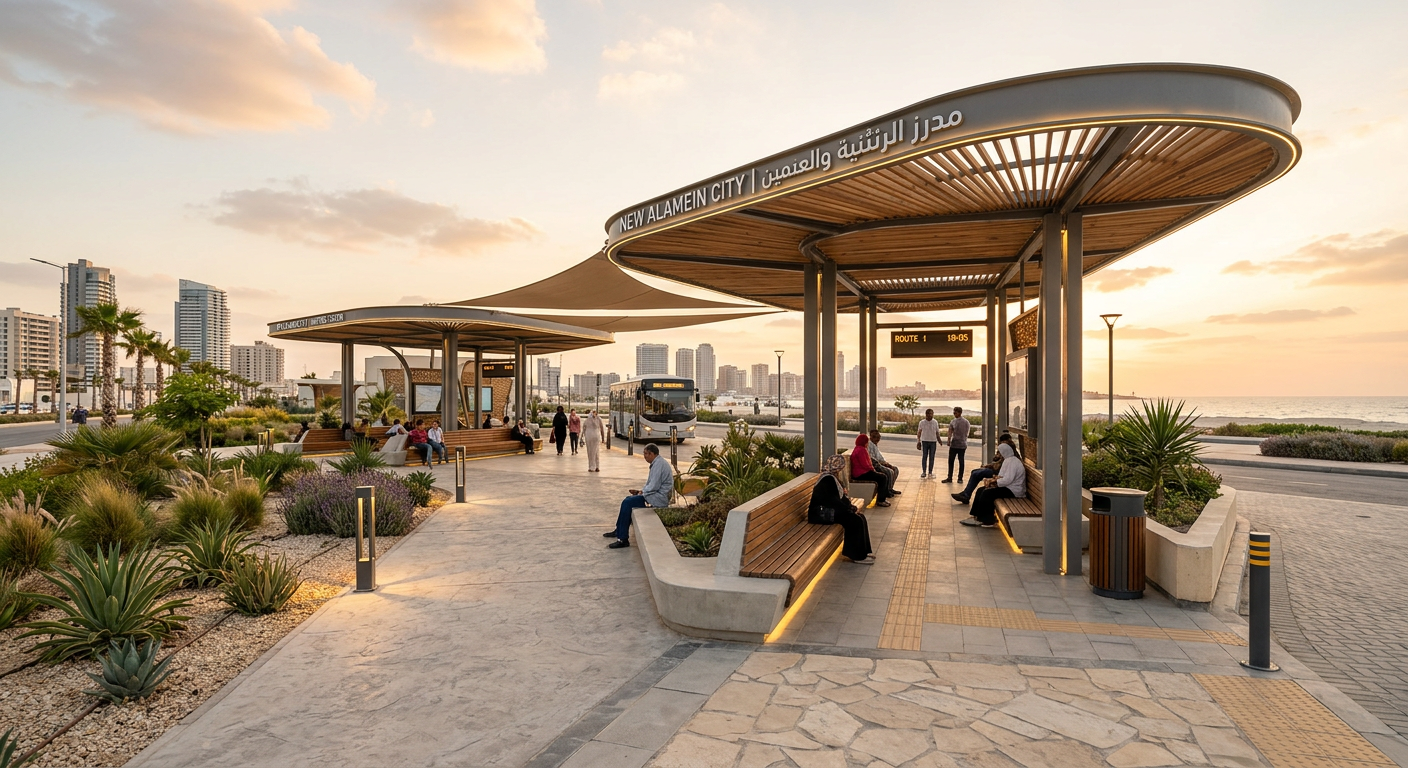
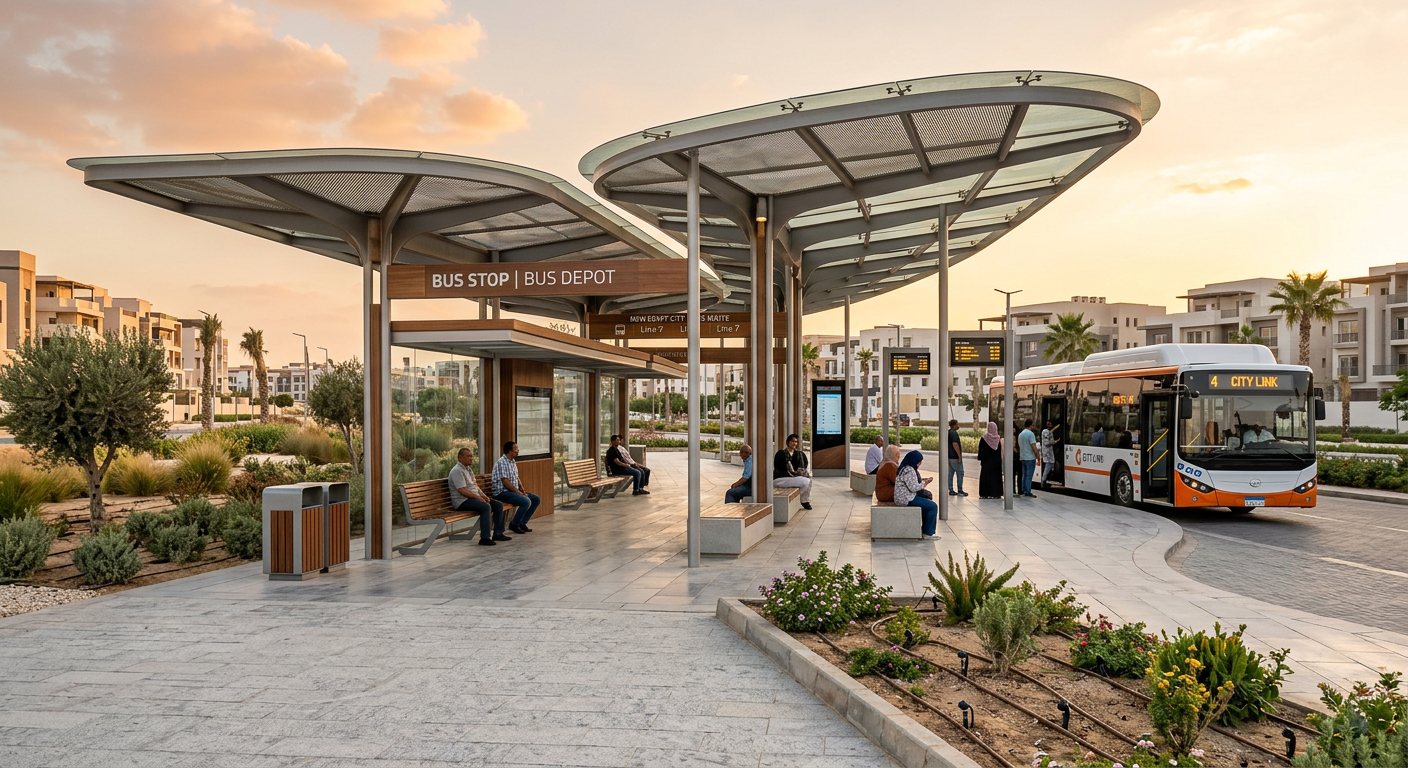
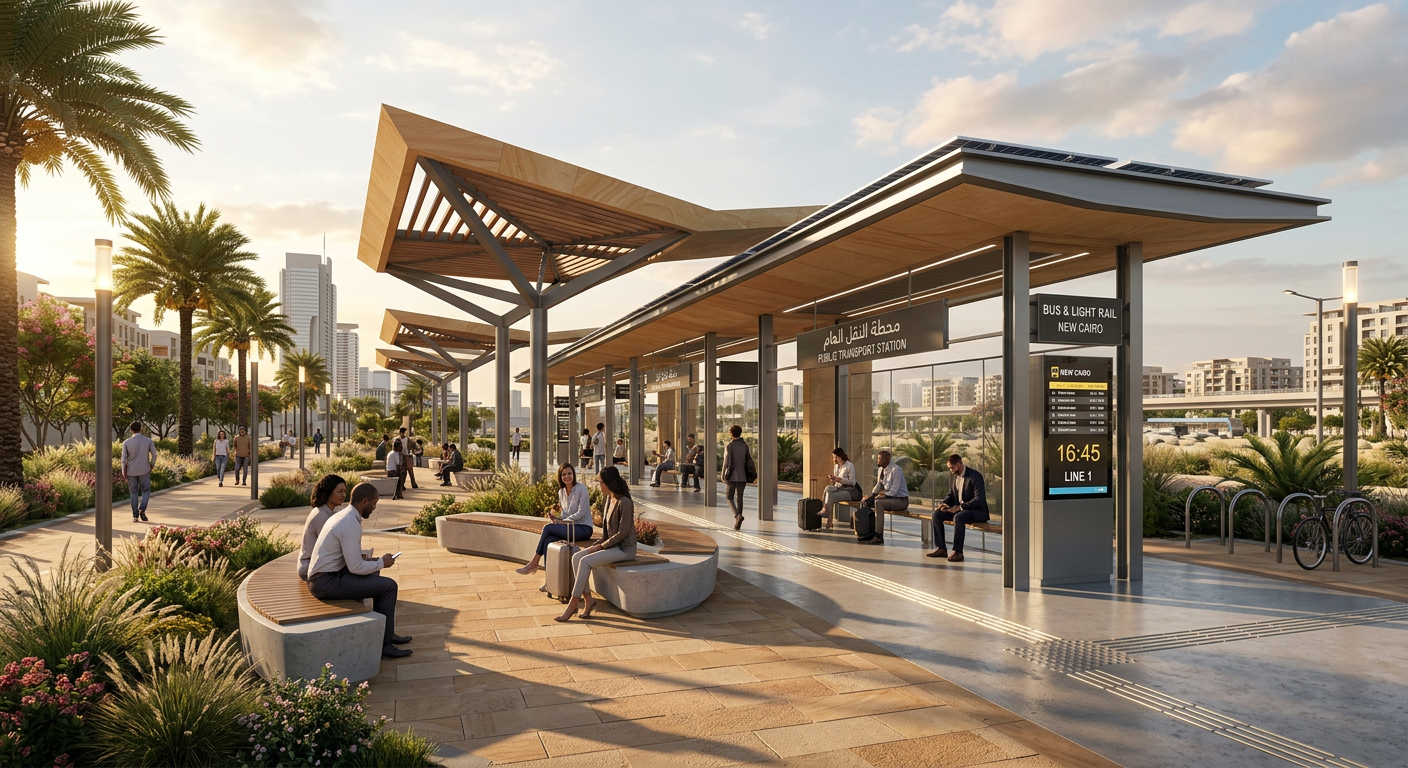
We designed, funded and built a waiting station and the surrounding public realm as a single integrated scheme. The project was delivered on schedule, entirely through Sawaqi's own investment, and transferred as completed infrastructure. A range of public-realm elements were integrated into one coherent piece of public space.
Integrated project elements
Landscape design and planting
Drip irrigation system
Shading structures
Seating and benches
Public lighting
Paving and surface treatment
Kerbs and edge detailing
Signage and wayfinding
Waste and recycling receptacles
Render to reality
The comparison below shows the design render alongside the completed project. On desktop, drag the divider to compare the two. On mobile, the images are stacked.
Funding and delivery model
The project was funded entirely by Sawaqi's own investment — no public funds, no third-party financing. We committed our own capital to prove that well-designed public space can be delivered to a high standard without burdening the public purse. The completed infrastructure was transferred to the relevant authority.
Impact
The station serves daily users with a dignified, well-designed piece of public infrastructure. Over 3,000 plants were installed with an integrated irrigation system. The project demonstrates that self-funded public-realm delivery is viable — and that an integrated practice can produce work of a standard typically associated with much larger, publicly-procured schemes.
Want to see this approach in your city?
If you are planning public realm or mobility infrastructure, we would welcome the conversation.
Get in touch